Understand enough to make better decisions
Get plain-language context on what AI can and cannot do so you can ask better questions and guide your team with more confidence.
AI for Home Care: Foundations
Practical AI readiness training for non-medical home care owners, franchisees, administrators, schedulers, care coordinators, and senior operators who need useful answers, not more hype.
24 lessons · Downloadable resources · One year of access
Individual enrollment $199 · Team options available

Built for the decisions agency teams are already facing: caregiver recruiting, shift coverage, intake, family communication, vendor claims, staff use, and data boundaries.
Owners and administrators are already dealing with recruiting, call-outs, shift coverage, intake, family expectations, caregiver communication, and too many tools. Now vendors, webinars, and generic AI advice are adding one more thing to evaluate.
AI sounds important, but most advice is not built for home care.
Staff may already be experimenting without shared language or boundaries.
Vendor claims can be hard to judge when you are running the day-to-day.
What the program helps you do
The goal is not to turn home care operators into AI experts. The goal is to help you become an informed decision-maker for your agency.
Get plain-language context on what AI can and cannot do so you can ask better questions and guide your team with more confidence.
Know which AI ideas are worth testing, which ones need more caution, and which ones are not ready for your agency.
Set practical boundaries for staff use, sensitive information, human review, vendor evaluation, and early adoption planning.
What's included
This is education for operators, not software, legal advice, or a heavy consulting engagement.
AI Readiness Workbook with prompts your leadership team can use
Home care use case mapping for recruiting, intake, scheduling, communication, documentation, and admin work
Vendor evaluation checklist for reviewing AI claims before you buy or pilot a tool
Safe-use guidance for data boundaries, human review, staff expectations, and public AI tools
30-day readiness plan with short modules, home care examples, and operator notes across four sections
Inside the course
Start with a short orientation, then work through the lessons at your own pace. All lessons are available when you redeem your seat.
Course material example
This sample module explains why workflow clarity comes before automation, using plain-language guidance built for home care operators.
Responsible AI
The program helps your team think through where AI may help, where human review is essential, and where client, caregiver, payroll, schedule, health, incident, or family information requires clear boundaries.
Know what should not go into public AI tools.
Keep human judgment involved in messages, decisions, and quality review.
Give staff simple guidelines before broader use begins.
Founder story
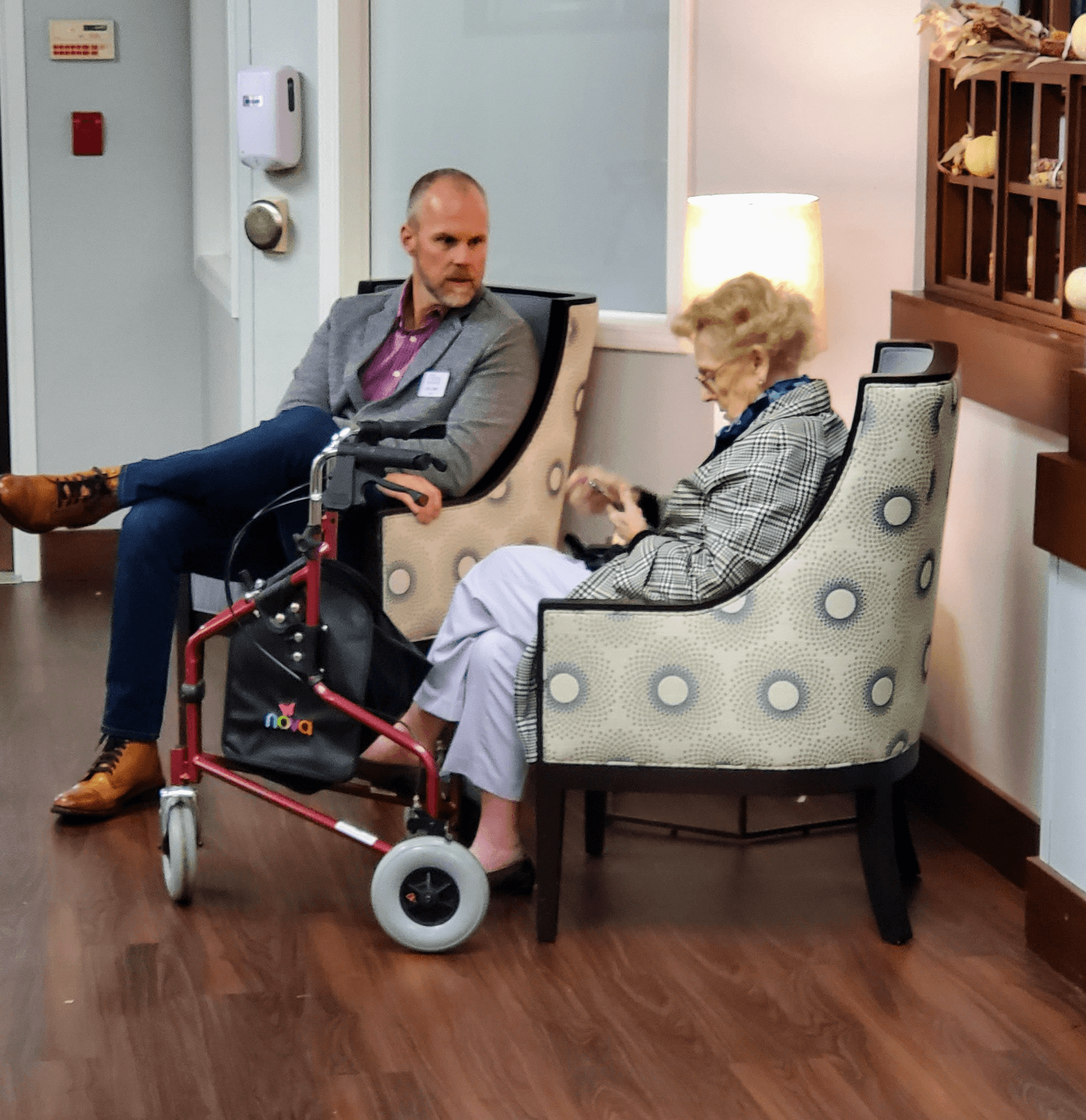
Joe Comly built and operated home care agencies before creating AI for Home Care.
As President and CRO of Home Matters Caregiving in Pennsylvania and Ohio, Joe helped grow and support multiple agency locations while leading a centralized administrative team.
His work included recruiting caregivers, filling shifts, completing in-home assessments, writing care plans, handling staffing pressure, meeting with referral sources, and building systems for recruiting, onboarding, intake, scheduling, and service delivery.
AI for Home Care was created to help agency leaders understand where AI may realistically help, where it may not, and how to make informed decisions without becoming technologists.
Choose your course seats
One payment. Self-guided learning built around the decisions your agency is facing.
Founding-customer offer
$199USD
One-time payment · 1 course seat
Learn with a colleague
$274USD
One-time payment · 2 course seats
Agency team package
$349USD
One-time payment · 3 course seats
Agency team package
$499USD
One-time payment · 5 course seats
Prices are in USD before applicable tax. Promotion codes can be entered at secure checkout. Returning customers can always buy an additional single seat for $159.20 — 20% off the $199 single-seat price — from their account. No code needed.
Add an optional 60-minute Readiness Review for $99, or a 90-minute Consulting / Coaching session for $199 at checkout. Booking details arrive with your purchase confirmation.
Schedule a conversation about your agency’s needsWhat happens after you enroll: Create or sign in to your account, verify your email, and complete checkout. You’ll receive one code per seat. Each learner redeems a code in their own account to start their year of access.
Try the self-guided course with a 30-day money-back guarantee. If it is not right for you, email ai4homecare@jbyron.ai within 30 days of purchase or course access becoming available, whichever is later, for a full refund. No explanation is required. Paid coaching and custom programs have separate cancellation terms. See our Refunds and Cancellations policy for details.
From Joe’s AI consulting work
“Joe provided a strong foundation for understanding AI and, more importantly, how we could apply it practically to enhance our business. He gave me the confidence to use AI more effectively to streamline processes and create meaningful efficiencies. After just four sessions with Joe, we were able to implement enhancements that are now saving us hours of time. I would highly recommend Joe to anyone looking to better understand AI and put it to work in a practical, impactful way.”
Try the self-guided course with a 30-day money-back guarantee. If it is not right for you, email ai4homecare@jbyron.ai within 30 days of purchase or course access becoming available, whichever is later, for a full refund. No explanation is required. Paid coaching and custom programs have separate cancellation terms. See our Refunds and Cancellations policy for details.
No. The course starts with core concepts and plain-language examples for owners, administrators, and home care leadership teams. You do not need coding experience.
Each learner receives one year of access starting when they redeem their seat code. Lessons are self-guided, so you can pause, return, and fit the course around agency work.
Yes. Every seat is delivered as an unassigned code. You can share the codes with your team; purchasing does not automatically assign a seat to you. Each learner needs their own verified account.
A certificate of completion is available after you finish all 24 lessons. It documents course completion; it is not professional certification or a claim of accredited continuing education credit.
This is an educational course with practical resources. Optional review and coaching sessions are available at checkout. The course does not include software subscriptions or a done-for-you implementation.
Your purchases and seat codes remain available in your account. Contact ai4homecare@jbyron.ai for help with login, purchase emails, seat redemption, or course access.
Request Program Information
Share the basics below and we will follow up with program information. Requesting details does not require a sales commitment.
Start with shared language, realistic use cases, and safer first steps before investing in tools or changing workflows.